
Death on the Home Front
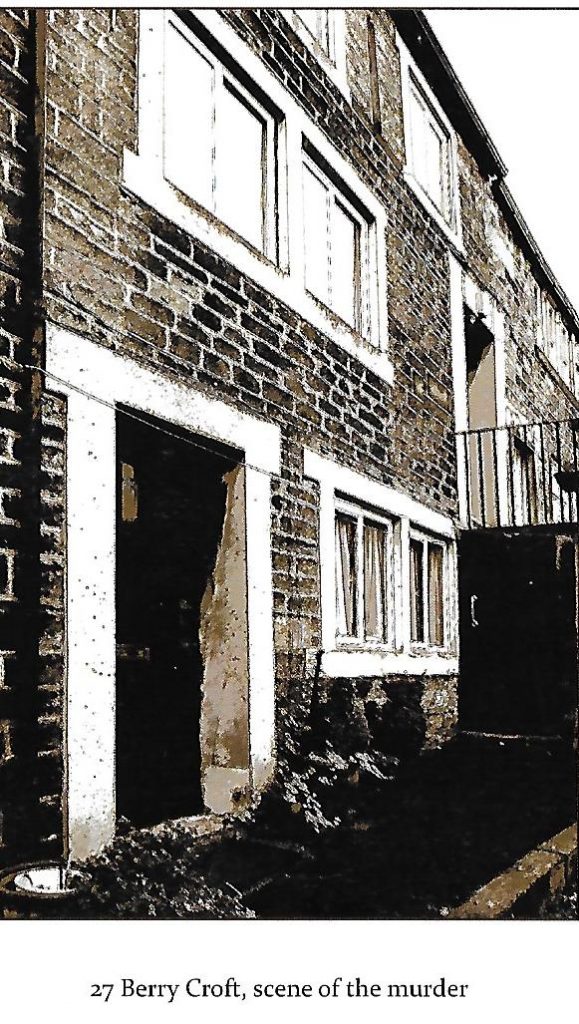
Alice Kaye was the 27-year-old wife of Ernest, a soldier who had enlisted in 1914. Since then she had lived on her own at 27 Berry Croft, Honley. She fell pregnant and to ensure she was looking after herself, her aunt, Mrs Donkersley, would stay with her overnight.
Each evening, Mrs Donkersley would arrive at the house and would not leave again until late the following morning. It was around 8.30 when Mrs Donkersley arrived, as usual, on the evening of Saturday, 6th November, 1915. However, she could get no reply to her repeated knocking at the door. The house was in darkness so Mrs Donkersley went next door and asked if she could wait until Alice returned home.
Throughout the evening, she kept trying to get into Alice’s house and by midnight, when there was still no sign of life, she asked a neighbour if she could stay with her for the night. The next morning, Mrs Donkersley tried again to get into to her niece’s house. There was still no reply, so she asked a man named Oldfield, who happened to be passing, to force an entry for her.
There was no sign of a struggle or a break-in when they entered the house, where they found Alice’s fully clothed body lying in a pool of blood. Her throat had been cut. The police were called, but despite enquiries, they could find no clues to the motive or the attacker. Alice’s death attracted newspaper headlines and soon the whole district knew of the murder at Honley.
Then, on Monday, 8th November, Harry Thompson approached a policeman in Ramsden Street, Huddersfield and confessed that he was the killer they were looking for. Thompson said that he had been seeing Alice for two years. Although at 55-years-old he was much older than Alice, he claimed that he had hoped to marry her but had lost his reason and attacked her when she said she was already married.
He said that he had met Ernest, her husband, but that Alice had told him that he was her brother and Thompson had believed her. Thompson’s story of his relationship with Alice was confirmed when his lodgings were searched and love letters were found from her. One of these, dated 5th November, revealed that arrangements had been made for the pair to meet the following day, the day of the murder.
Harry Thompson was sent to Huddersfield police court for trial where he admitted that he had killed Alice, saying that they had argued over his discovery that she was married. He had slashed out at her in a temper and then left the house – but had not known that she was dead until he read about it in the newspaper.
Thompson was committed for trial at Leeds before Mister Justice Sankey on 29th November, a trial which lasted just one day. What should have been a straightforward case became much more complex when Thompson withdrew his confession, claiming that he had visited Alice on the day of the murder but only stayed with her until some time between five and six o’clock. She was alive and well when he left her, he said and explained his confession by saying he was unbalanced by reading that the woman he loved had been murdered.
It took the jury half an hour to decide that his original version had been the truth and that Thompson was guilty of murder, by cutting her throat with a razor. He was hanged at Wakefield prison on Wednesday, 22nd December, 1915.


