Sydney Tyndall Liversedge
Honley's Flying Ace !
This is an Excerpt taken from Honley in the Great War by Peter Marshall, published by Honley Civic Society.
Sydney Liversedge was born 15th August, 1897 in Honley, the son of James Arthur and Ethelinda Liversedge, who lived at 26 Highfield Terrace, Eastgate. opposite Honley Bridge. They had previously lived at Cliffe Wood Terrace, Brockholes and before that in Nursery Street, Huddersfield. Ethelinda (nee Hirst) came from Honley and she and James were married at St Mary’s Honley on Christmas Eve, 1887. James had a position as cashier at Crossley Mill and so the family were in the fortunate position of having one servant, who lived in the house.
However, before the outbreak of war, they had moved back to Huddersfield and Sydney went to school from their new home in Fartown Green. James was an enthusiastic chess player and played for Yorkshire in 1899/90 and 1904.
Sydney began his military service as a trooper in the 1st Life Guards but in 1916 at the age of 19, he joined the Royal Flying Corps as a flying cadet, being sent almost at once to France. In July 1917, he was promoted to temporary 2nd Lieutenant. His brother Herbert Donald Liversedge, had already joined the army in 1914 and in turn became 2nd lieutenant in The King’s Own (Yorkshire Light Infantry) in April 1915. He left the army in 1919.
Once in the RFC, Sydney was twice injured in a matter of a few weeks but when he transferred to what had become RAF No. 70 Squadron in March 1918, his skills
improved. Flying a Sopwith, Sydney brought down 13 aircraft including six fatalities, not all as a solo effort as some were in conjunction with other pilots. Details can be found in the panel below, The number of aerial victories required to officially qualify as an “ace” has varied, but is usually considered to be five or more. During this time he progressed to the rank of Flight Commander, although he saw out the Armistice in hospital once more.
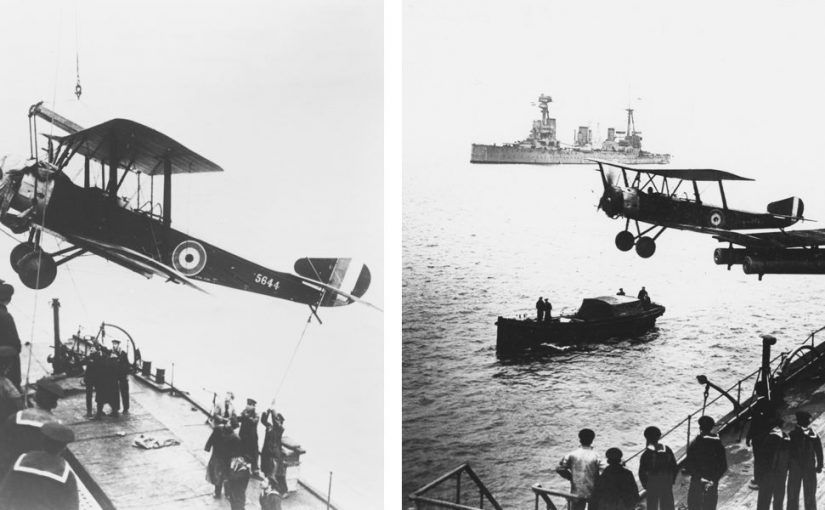
Sydney’s unit, Royal Flying Corps No. 70 Squadron, was formed at South Farnborough in 1916. It was the first RFC Squadron to fly the Sopwith 11⁄2-Strutter – the first British aircraft to enter service with a synchronised machine gun. The name “11⁄2 Strutter” was because of the long and short pairs of struts supporting the top wing.
The unit transferred in 1916 to Fienvillers, 29 km east of Abbeville in Picardy, to take up fighter patrols and was active in the Somme during 1916, Arras and Ypres in 1917, returning to the Somme in 1918. Sydney Liversedge’s successes reflected the push eastwards towards Belgium. The squadron remained in Europe until February 1919, the year Sydney left the RAF.
Sydney Liversedge went on to have a career in mechanical engineering and in the 1950s had two patents to his name, jointly with an American company, Electric Hose & Rubber Co. Ltd. He died in Huddersfield in 1979.


